
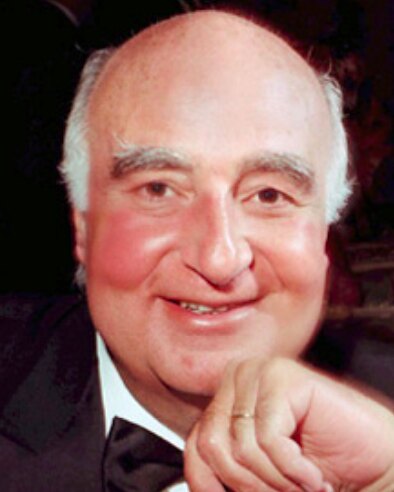
Edmond J. Safra
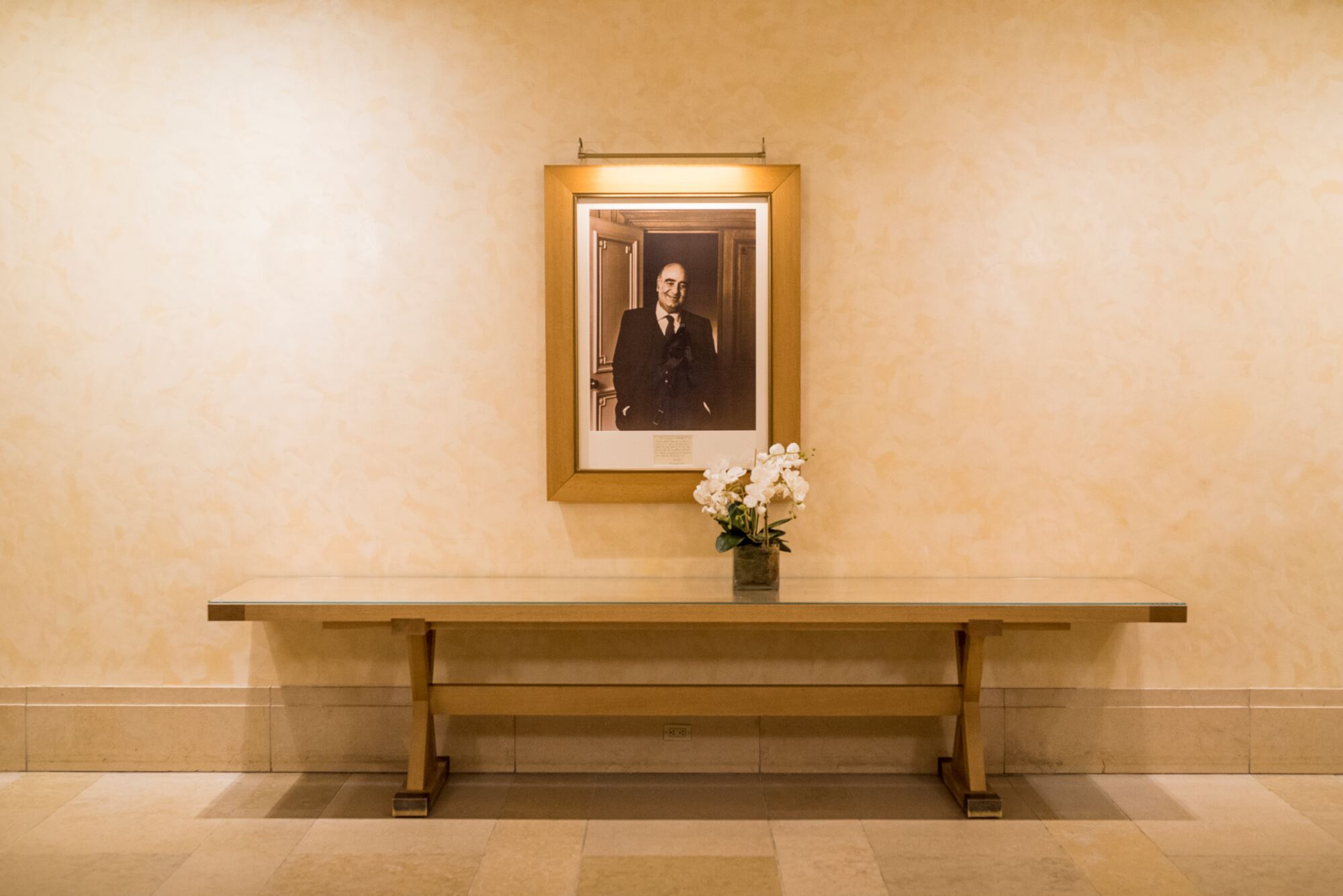
Mr. Edmond J. Safra was one of the most accomplished bankers of the 20th century, having established an unparalleled reputation for financial acumen and trust.
Scion of a respected Aleppo family whose roots in banking began during the age of the Ottoman Empire, he used his considerable talents to build a business that spanned more than thirty countries across the globe.
Remembered worldwide as a kind and noble benefactor who was always available to those who called on him in their hour of need.
His life and philanthropy
Edmond Safra was just sixteen when he went to Milan to work on behalf of his family’s banking business. Following his recommendation, the Safra family moved to Brazil, where father and son founded Banco Safra S.A. He was Founder and Honorary Chairman of the Republic New York Corporation and Republic National Bank of New York, and Chairman of its European private banking subsidiary, Safra Republic Holdings S.A. In 1999 he sold his holdings in Republic New York Corporation and Safra Republic Holdings to London-based HSBC. He died on 3 December 1999 in Monaco and is buried in Geneva.
Edmond J. Safra inherited from his parents an extraordinary sense of duty and obligation to others. His father, Jacob, was a leader of the Jewish community of Beirut, one of the most important patrons of the synagogue and other religious institutions, and a generous supporter of the less fortunate, who imparted to his son the lesson of leading by personal example. Although she died when he was young, Edmond Safra always remembered accompanying his mother, Esther, on her regular visits to the poor and sick in Beirut.
Throughout his life he thought of philanthropy as a solemn responsibility and a privilege, never a burden. The head of a worldwide banking empire, he devoted an enormous amount of time and energy to helping others, his humility leading him to almost never take any personal credit. He had staff in Geneva, New York, London, Paris, Mexico City and Buenos Aires dedicated to following up on requests for assistance, and he actively searched for people who needed help, regularly asking friends in other cities to find worthy causes for him to support.
His faith was an essential part of his everyday life. He recited his prayers every morning, celebrated the holidays in the synagogue with his family and discussed the holy books with rabbis and teachers. He was particularly devoted to the community from which his family came, and in his lifetime he was said to be the most significant individual supporter of Sephardi religious and cultural institutions worldwide.
He placed particular importance on the needs of smaller Jewish communities, helping congregations such as Sarajevo and Rhodes have services on Rosh Hashanah, Yom Kippur and Passover by providing funds for a hazzan, siddurim, and food and wine. He believed that building and renovating synagogues mattered wherever a Jewish community could flourish: he helped to renovate and enlarge synagogues in Amsterdam, Madrid, Istanbul, Naples, Budapest, Rhodes and Vienna, saved the historic synagogue of Clermont-Ferrand, and helped build synagogues as far as Manila and Kinshasa.
He supported dozens of synagogues and yeshivot in Israel, among them Yeshiva Porat Yoseph and the Jerusalem Great Synagogue. The tombs of Rabbi Meir Baal Haness and Rabbi Shimon Bar Yohai were especially important to him; for many years on erev Shavuot, the yahrzeit of his father, he prayed at the tomb of Rabbi Meir until dawn. Hundreds of Sifrei Torah and sacred books that he donated in memory of his parents can be found throughout the world.
Caring for the sick took priority over everything else in his life. He was one of the founders of Albert Einstein Hospital in São Paulo, initiated the Edmond and Lily Safra Children’s Hospital at Tel Hashomer, and supported medical research at the Institut Pasteur, the Weizmann Institute and many other centers. Through the International Sephardic Education Foundation, which he established in 1977, he helped tens of thousands of deserving Israeli students attend university.
He made major contributions to the national, cultural and religious life of the State of Israel, including building Safra Square in Jerusalem, and he was a founder of the Israel Museum and a long-time supporter of Yad Vashem. He was named Commandeur de l’Ordre des Arts et des Lettres and Chevalier de la Légion d’Honneur by the French government. Following his passing, under the chairmanship of his wife Lily, the Edmond J. Safra Philanthropic Foundation continued to draw inspiration from its founder’s life and values.